
Custom Leather Passport Holders: Wholesale Buyer's Guide


ORDER READINESS MAP
Build a practical brief before production starts
Use this short route to turn a product idea into an order a factory can quote and make consistently.
-
01
Define the item
Set the product type, intended use, and the non-negotiable details.
-
02
Specify the build
Align leather, construction, logo, packaging, and target quantity.
-
03
Confirm readiness
Use sampling, a clear approval point, and a workable reorder plan.
Custom leather passport holders look simple, but small specification differences can change how the product feels, performs, and presents a brand. A buyer must decide how the passport fits, whether card and boarding-pass storage is needed, whether RFID shielding is part of the brief, how the logo should appear, and how each unit will be packed.
This guide turns those choices into a practical wholesale specification. Use it before requesting a sample or quote so suppliers compare the same product rather than different interpretations of a passport holder.
Quick specification decisions
| Area | Common choices | What to confirm before sampling |
|---|---|---|
| Layout | Passport-only cover, card slots, boarding-pass pocket, zip travel wallet | Target passport, internal clearance, slot count, open and closed size |
| Leather | Genuine leather, full-grain options, other project-specific materials | Grade, thickness, color, grain, backing and edge finish |
| RFID | No shielding or an added shielding layer | Protected items, test method and acceptance requirement |
| Logo | Debossing, foil stamping, laser marking or printed method | Artwork, size, position, color and sample approval |
| Packaging | Protective bag, pouch, folding box or rigid gift box | Sales channel, transit protection, labeling and carton packing |
| Order plan | Sample, bulk quantity and delivery target | Reference MOQ, final quote, production schedule and shipping method |
1. Start with the intended use
A retail travel accessory, a corporate gift and a private-label collection do not need the same design. Before choosing a layout, define who will use the holder and what it must carry.
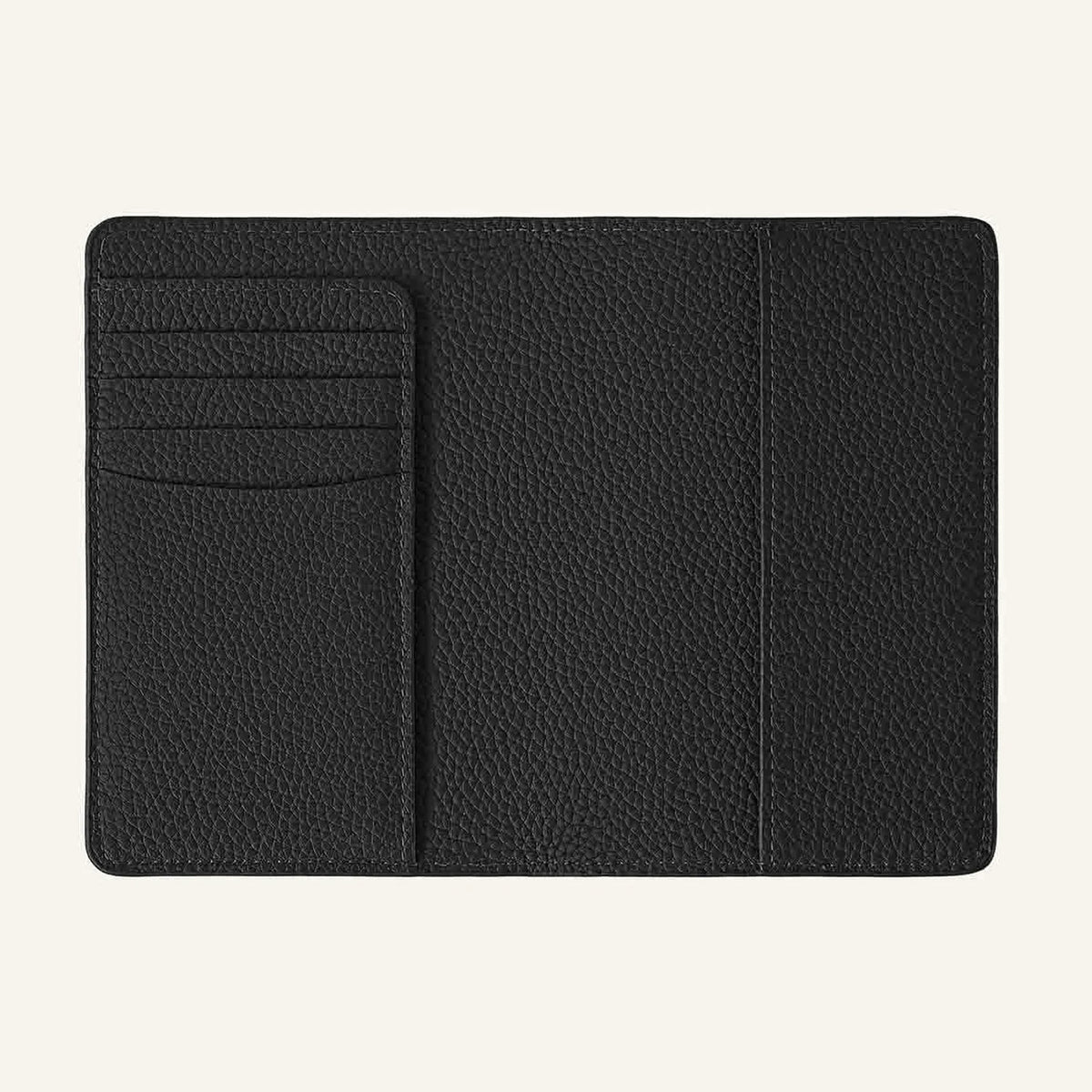
A compact passport cover may need only two retaining flaps. A business-travel version may add card slots and a boarding-pass pocket. A travel wallet may need a zip closure and more storage, but that extra construction increases bulk and creates more stitching, edge and hardware details to inspect.
Write the use case in one sentence. For example:
A slim private-label passport holder for frequent business travelers, with one passport compartment, two card slots, a discreet front logo and gift-ready packaging.
That sentence gives a supplier a clearer starting point than “premium custom passport holder.”
You can review the current Leather Passport Holder product page and the broader bulk leather card-holder collection before defining the brief.
2. Define the layout with measurable details
Do not approve a layout from front-view images alone. Include the following measurements and functional details in the request for quotation:
- Open and closed dimensions.
- Target passport dimensions and expected page thickness.
- Internal clearance around the passport cover.
- Number, orientation and finished width of card slots.
- Boarding-pass, receipt or currency pocket requirements.
- Closure type, if any.
- Pen loop, SIM-card pocket or other optional features.
- Finished product weight target, if weight matters to the sales channel.
Ask for a physical sample and test it with the actual passport and cards used in the target market. Check that the cover opens without pulling, cards can be removed without excessive force, and the closed holder stays flat enough for the intended pocket or travel bag.
For a first order, an existing production-tested layout with one or two controlled changes is usually easier to sample than a completely new multi-pocket construction.
3. Match leather and construction to the design
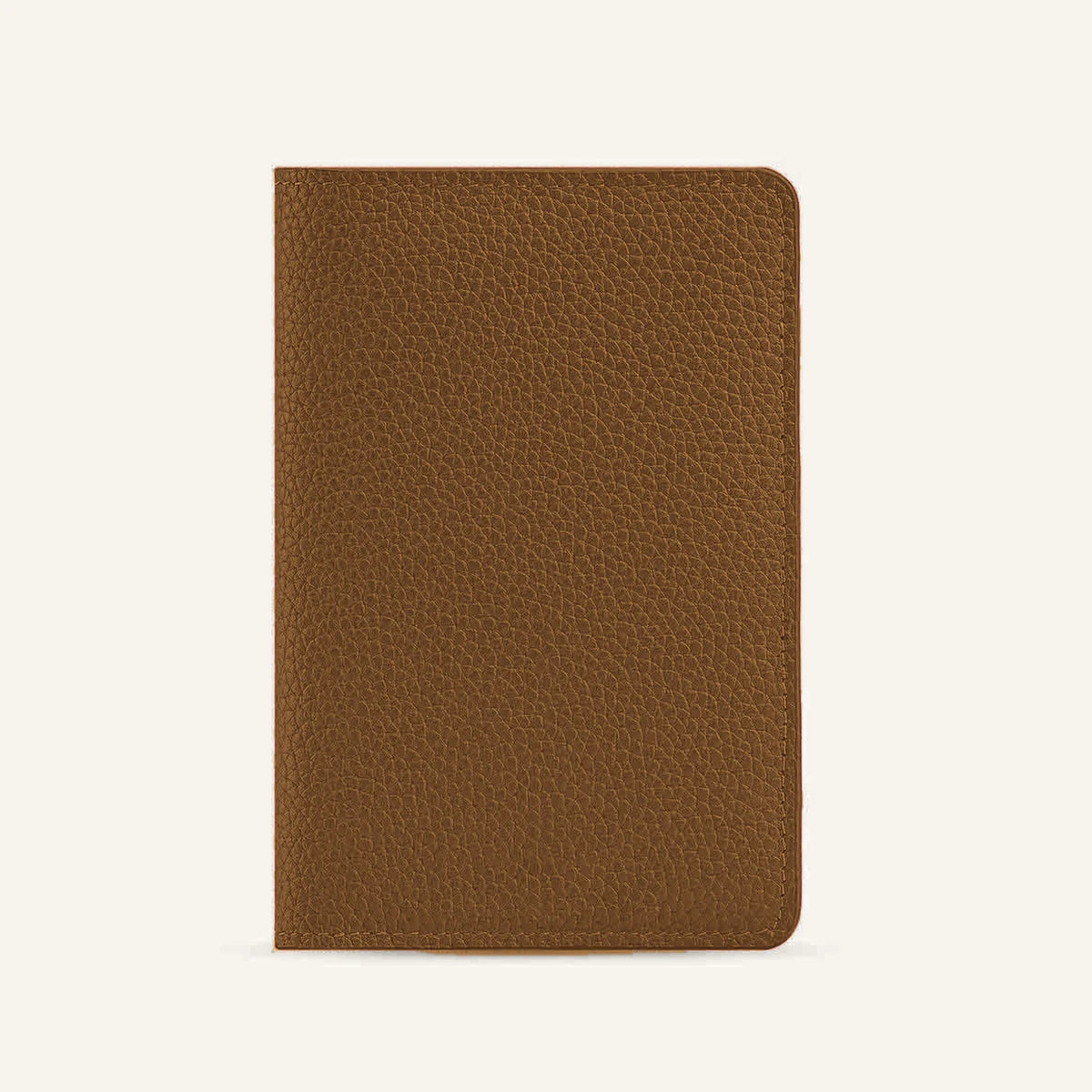
The target product page currently lists genuine leather and full-grain leather options, with the final specification confirmed through the sample. Treat those options as a starting point rather than assuming every leather, color or thickness is available for every construction.
Before sampling, confirm:
- Leather type and grade.
- Color standard or approved swatch.
- Target thickness after any splitting or backing.
- Surface grain and finish.
- Lining or reinforcement material.
- Edge paint, folded edge or raw-edge treatment.
- Stitch color, stitch distance and corner shape.
A thicker leather may feel substantial but can make card-slot layers bulky. A soft leather may feel premium but need reinforcement around openings. A light color may show handling marks more easily during production and packing. These trade-offs should be judged on the finished sample, not from a loose leather swatch alone.
Use the Material Lab to prepare a more precise leather brief, then ask the supplier to identify the exact material used on the sample.
4. Treat RFID as an optional technical specification
RFID shielding should not be assumed to be included in every leather passport holder. If the feature matters to the product position, add it explicitly to the specification and agree how it will be checked.
Ask the supplier:
- Is the shielding layer included in the quoted construction or priced as an option?
- Which documents or cards is the construction intended to shield?
- What material specification or test evidence is available?
- What pass/fail method will be used on the approved sample and bulk inspection?
- Does the shielding layer change thickness, flexibility or edge construction?
Avoid publishing a broad “RFID protected” claim until the exact construction and acceptance method have been confirmed. If RFID is not important to the target customer, omitting it may simplify the product and quote.

5. Approve the logo on the actual leather
A logo that looks sharp in a digital mock-up can appear shallow, uneven or low contrast on the finished leather. Grain, finish, oil content, heat and pressure all affect the result.
Common approaches include:
- Debossing: subtle, tone-on-tone branding with no added color.
- Foil stamping: stronger contrast for corporate or retail presentation.
- Laser marking: useful for some detailed designs, but the color change depends on the material.
- Printed methods: suitable for selected surfaces and higher-color requirements, subject to adhesion testing.
Provide vector artwork and specify the logo width, height and location in millimeters. Ask for the logo on the exact leather and color planned for production. Confirm any tooling charge and whether the die can be reused on a repeat order.
The leather logo methods guide explains the main visual and production trade-offs.
6. Choose packaging for the sales channel
Packaging must protect the leather and fit the way the product will be sold. A wholesale item going into a retailer’s own box needs different packaging from a finished corporate gift.
Typical levels include:
- Basic transit protection: an individual protective bag with suitable surface protection.
- Retail-ready pouch: a non-woven, cotton or other approved pouch with required labels.
- Gift-ready box: a folding or rigid box with insert, printed branding and shipping protection.
Ask the supplier to quote packaging separately. Specify barcode or label requirements, warning text, country-of-origin marking where applicable, inner-pack quantity and master-carton packing. For gift boxes, request a packed-product sample because the insert, box clearance and transit protection must work together.
See the custom leather goods packaging guide for a fuller packaging checklist.
7. Check the sample before bulk production
A useful sample approval sheet records measurable acceptance points rather than comments such as “looks good.” Review at least:
- Finished open and closed dimensions.
- Passport and card fit.
- Leather type, color, grain and thickness.
- Symmetry, stitching and corner shape.
- Edge finish and surface cleanliness.
- Logo size, position, depth and color.
- RFID requirement and agreed check, if included.
- Packaging, labeling and packed presentation.
Photograph the approved sample and keep the confirmed specification with it. If a pre-production sample is required after material or tooling changes, define that step before the bulk order starts.

8. Confirm MOQ, quote and schedule as project-specific terms
The current Leather Passport Holder product page displays a reference MOQ of 100 pieces per design. Use that as an initial planning figure only. The final minimum order and unit quote can change with leather availability, color count, custom tooling, RFID construction and packaging.
For a comparable quote, send each supplier the same information:
- Product layout or reference model.
- Leather and color requirements.
- Logo artwork, size and method.
- RFID requirement, if any.
- Packaging level and labeling.
- Quantity by color or design.
- Sample requirement.
- Target delivery location and required arrival date.
Do not treat a target delivery date as a confirmed lead time. Ask the supplier to separate sampling, material preparation, bulk production, inspection and shipping, then confirm the schedule in the quotation or order documents.
The leather goods MOQ guide provides more context on why customization changes minimum quantities.
9. Copy-and-send RFQ checklist
Use this short brief when contacting a supplier:
- Project: custom leather passport holders for wholesale/private label/corporate gifting.
- Target market and use: [describe buyer and sales channel].
- Layout: [passport flaps, card slots, extra pockets, closure].
- Finished size: [open and closed dimensions].
- Leather: [type, grade, thickness, color and finish].
- Logo: [method, size, position and artwork file].
- RFID: [not required / required with agreed test].
- Packaging: [bag, pouch, box, labels and carton requirements].
- Quantity: [units by color/design].
- Sample: [plain, logo or pre-production sample].
- Delivery: [destination and required arrival date].
- Quote format: itemized product, tooling, sample, packaging and shipping costs.
FAQ
What is the MOQ for a custom leather passport holder?
The current Aarons Leather product page shows a reference MOQ of 100 pieces per design. Final requirements depend on the selected material, color breakdown, logo process, construction and packaging, so confirm the MOQ in the project quotation.
Is RFID blocking included by default?
No. Treat RFID shielding as an optional technical requirement unless the selected model and quotation explicitly include it. Confirm the construction and acceptance method before using an RFID claim in retail copy.
Should I order a sample before a bulk order?
Yes. A physical sample is the practical way to check passport fit, card-slot function, leather, stitching, logo appearance and packaging. Approve measurable specifications, not photos alone.
What files should I send for the logo?
Send vector artwork where possible, together with the finished logo dimensions, placement and color. Ask for a sample on the exact leather and color selected for production.
Prepare a quote-ready passport-holder brief
A reliable wholesale program starts with a precise brief: layout, leather, RFID requirement, logo, packaging, quantity and delivery target. Confirm those details on a physical sample and keep the approved sample as the production reference.
When the brief is ready, use the B2B enquiry page to request a sample and itemized quote from Aarons Leather. Include the target market, quantity by design, preferred leather, logo file, packaging level and required arrival date so the team can evaluate the project accurately.


