Exotic leathers.

Four leathers with very different surfaces. Explore the scales, beaded grain and quill markings, and what each can bring to a leather goods collection.

A specialist part of leather goods manufacturing.

In our experience, finished products in these materials are less commonly offered by general leather goods factories in China. The work starts with choosing the right part of the skin and deciding how its pattern will sit on the product.

Crocodile leather

Crocodile leather puts the scale pattern at the centre of the product. The effect changes with the area selected and the finish: glazing brings a reflective, dressed appearance, while matte finishing gives a lower sheen. Texture and flexibility are shaped by tanning and finishing, so the name alone does not tell you how a case or bag will feel.
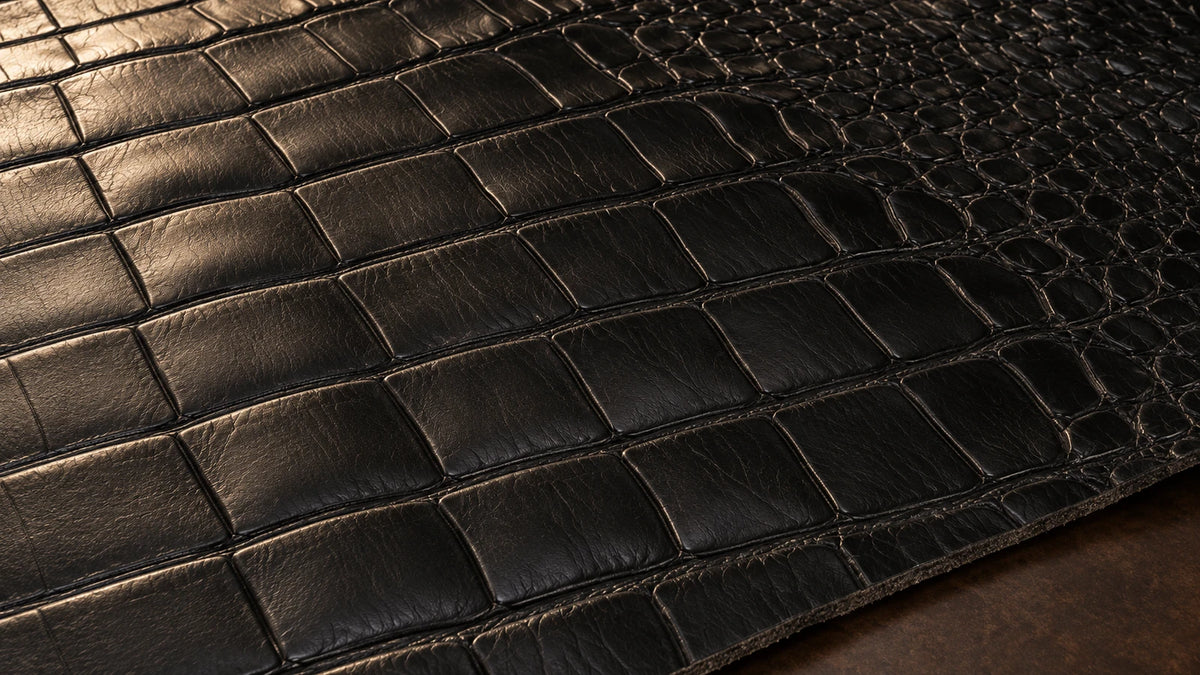
Black crocodile leather surface with large scale divisions

Let the pattern lead. The larger scales give a simple shape a strong visual presence. A plain outline leaves room for the pattern, without needing much extra decoration.

For a more formal collection. A direction for premium wallets, cases and bags, and for customers who want a recognisable scale pattern on a restrained design.

Plan the visible panels. Matching scales across several panels reduces cutting freedom. Agree the layout, openings and acceptable natural variation before quoting.

Material reference

Lizard leather

Lizard leather is recognised by its close pattern of small scales. Often thin and supple, it gives compact accessories visible detail without a broad, heavy pattern. Natural markings can be retained for variation or subdued through processing for a more uniform colour. A glazed finish brings out the scales through shine; a matte finish creates a quieter result.

Black lizard leather surface with a closely spaced scale pattern

Detail on a smaller scale. The fine pattern can sit comfortably on slim wallets, card cases and smaller panels. Scale direction becomes part of the design around seams, openings and edges.

For customers who notice the detail. Consider it for compact accessories and collections where the leather should reward a closer look rather than dominate the whole silhouette.

Start with the panel size. Large, uninterrupted panels need suitable skin size and clean cutting areas. A small accessory has different material requirements from a bag.

Material reference

Stingray leather

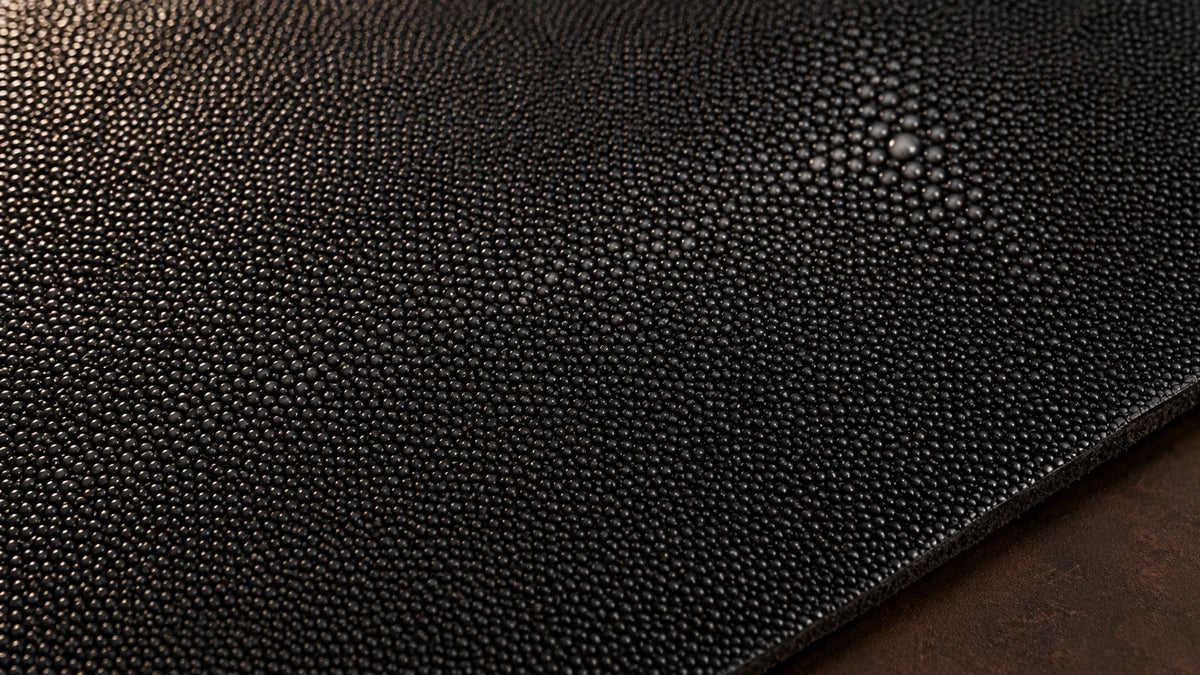
Stingray leather is recognised by its dense, bead-like surface. The central crown can create a visible focal point, so its position matters in a finished design. Standard and polished finishes offer different results: polishing smooths the surface and makes the crown less pronounced, while an unpolished finish keeps more of the raised texture.

Black stingray leather with a beaded surface and a light central marking

Texture that becomes the focal point. The closely packed grain adds surface depth to a simple phone case, wallet or accent panel. A visible central marking can give the design a clear centrepiece.

For a statement accessory. A choice for customers drawn to tactile surfaces and a more noticeable finish. It suits collections where the material is meant to be seen and felt.

Choose the finish and the centre. A prominent crown limits where the panel can be cut. Agree the finish and crown position early, then review them on the product.

Material reference

Ostrich leather

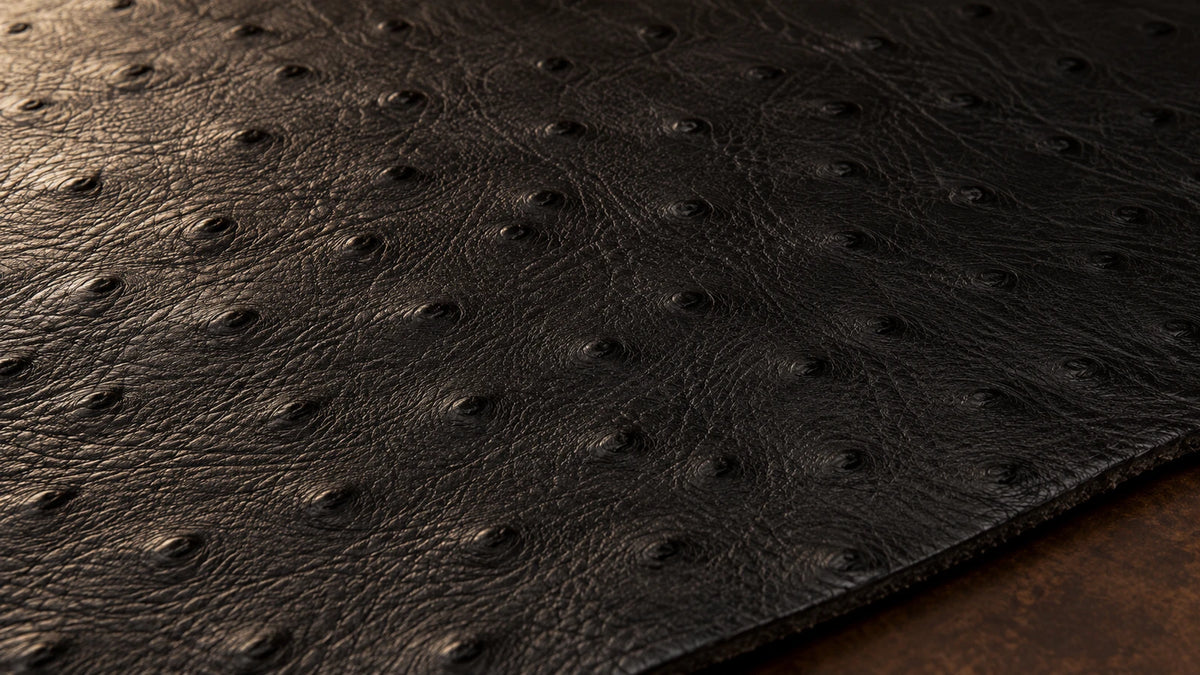
Ostrich body leather is recognised by the rounded quill marks left by feather follicles. Those raised points sit among smoother areas, giving the surface an irregular pattern rather than rows of scales. It can be finished with a soft, silky handle, or a drier feel and different levels of sheen. The finish matters as much as the leather name.

Black ostrich leather surface with raised quill markings

A softer visual direction. The quill pattern gives the surface depth without a geometric scale pattern. It is worth considering for handbags, wallets and other pieces where touch is part of the appeal.

For tactile, everyday accessories. A direction for customers who want a supple-feeling piece with visible natural texture. The final hand feel depends on the finish selected for the project.

Agree the amount of quill texture. Quill coverage varies across the skin. Plan how much texture each panel should show instead of expecting every piece to match.

Material reference

From material to finished piece.

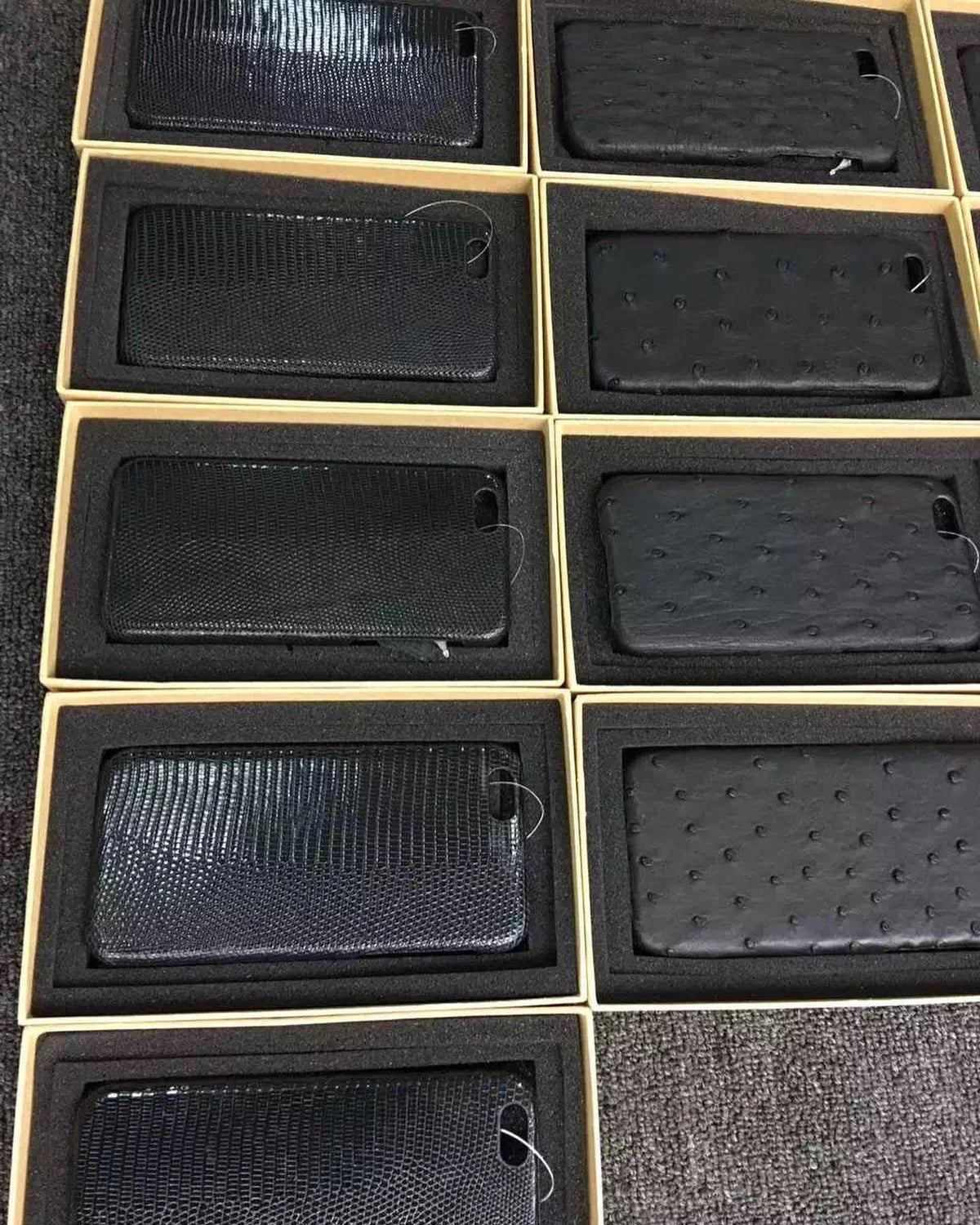
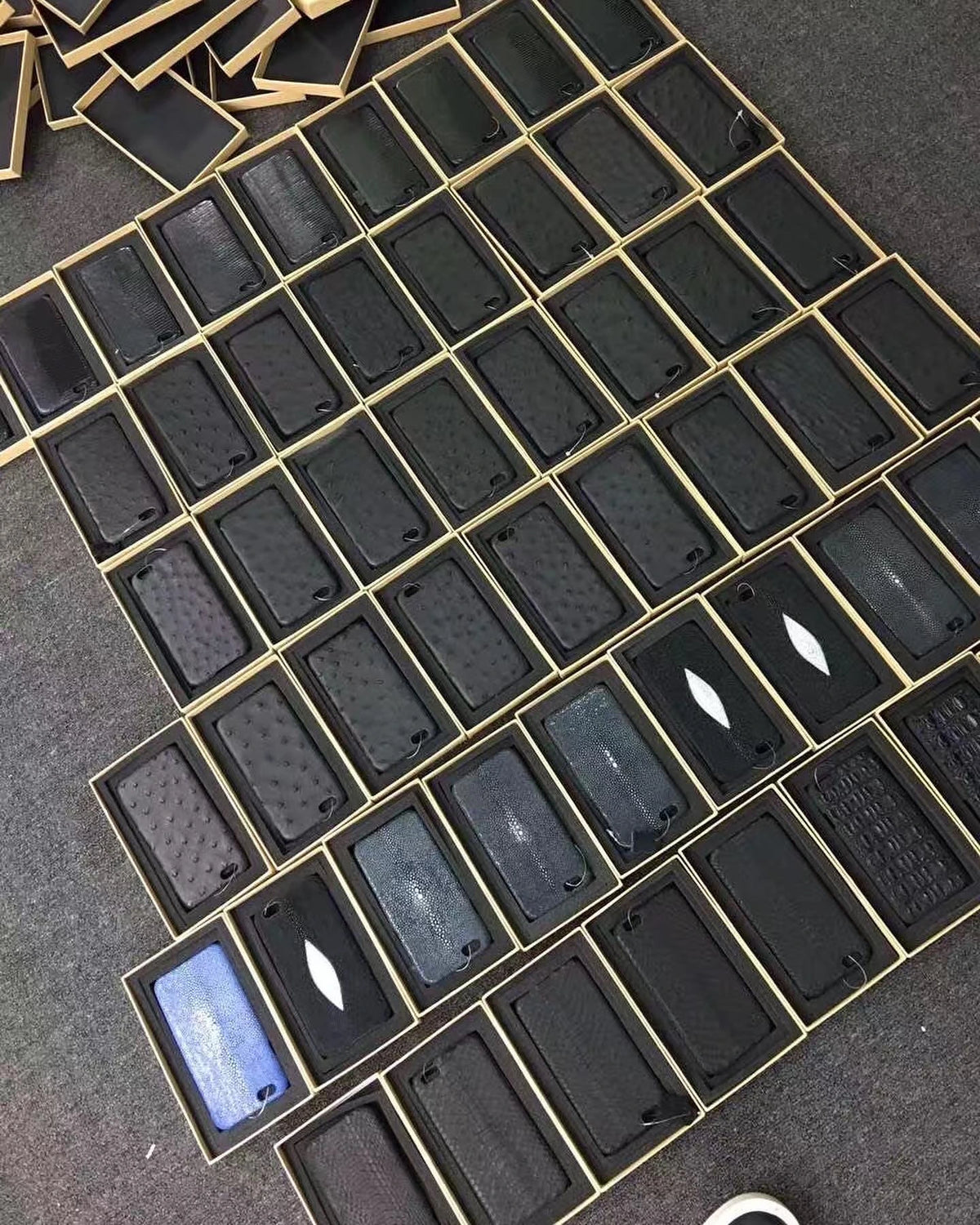
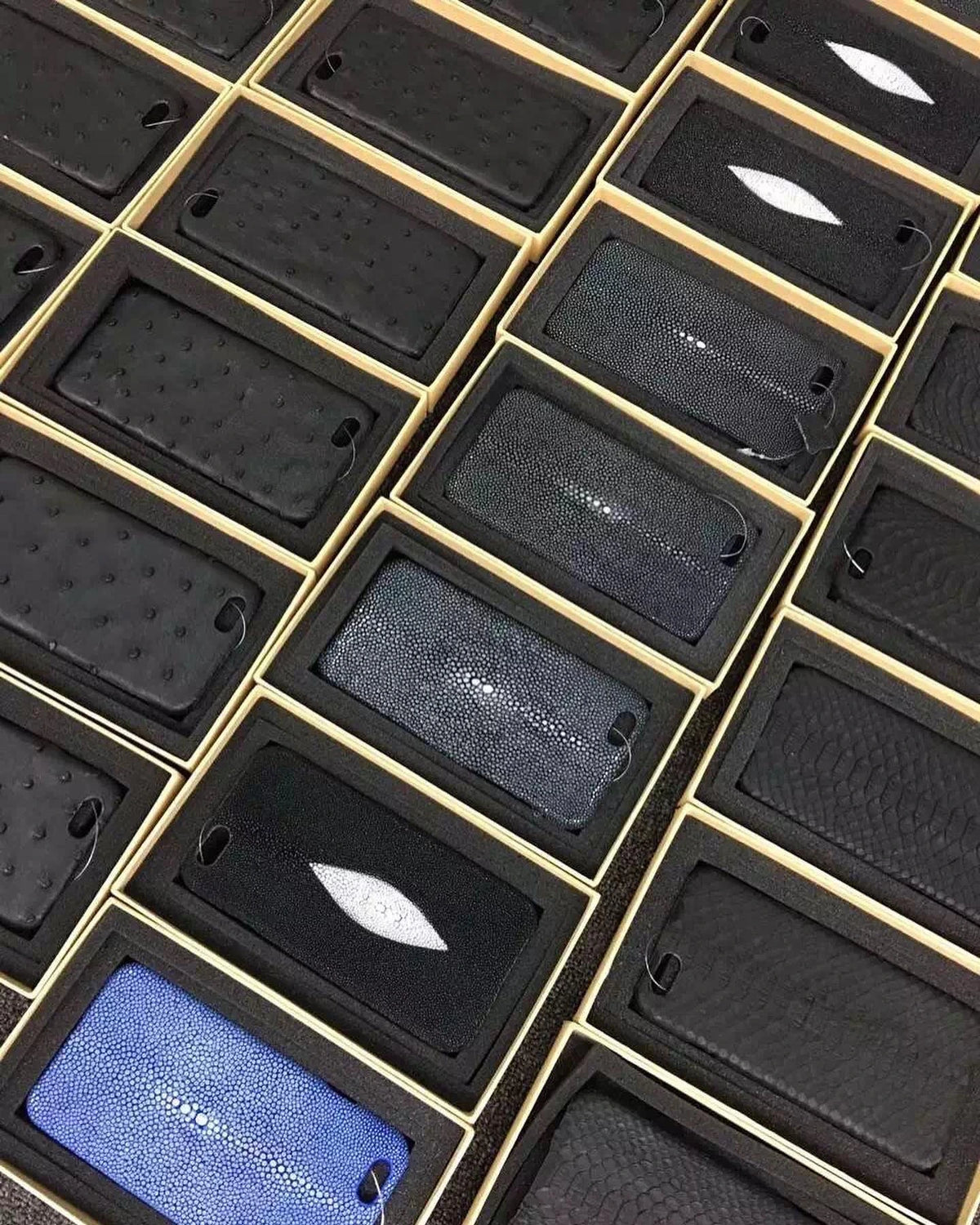
These photographs record exotic leather phone cases we made for European customers. They show the four materials together, finished and packed.

Which leather fits your next collection?

Share the product you have in mind, the material you are considering and the estimated quantity. We can discuss the pattern, construction and finish for your project.

Request a Quote

Production photograph